
HVAC: Smarter Customer Intake for Faster Quotes and Bookings
For HVAC businesses, speed matters. When an air conditioner stops working during a heatwave or a heating system fails on a cold night, customers usually aren't interested in waiting hours for a callback. They want someone to answer, understand the problem, and tell them what happens next.
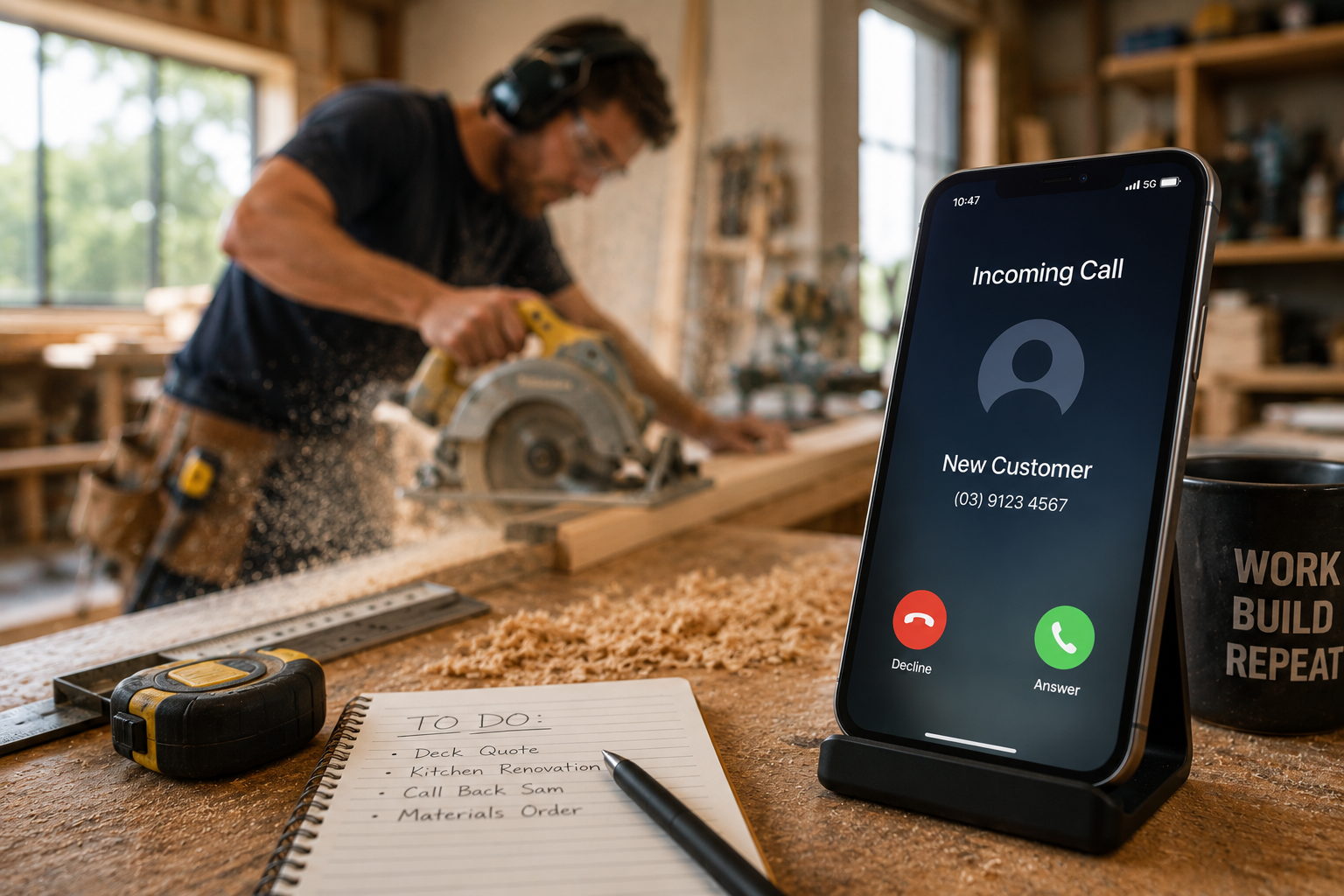
But that can be difficult when technicians are already driving between jobs, working on installations, inspecting equipment, or diagnosing systems. Calls get missed, voicemails pile up, and potential customers may simply move on to another HVAC company.
AI-powered call handling can help create a faster front-office process by answering calls, collecting useful information, qualifying service requests, and helping customers move toward the appropriate next step.
When Every Missed Call Could Mean a Missed Job
HVAC demand often increases precisely when technicians and office teams are busiest. Extreme temperatures can create a sudden wave of repair requests, maintenance calls, and emergency enquiries.
Answering every call manually isn't always practical.
An AI receptionist can provide another layer of call coverage by answering routine enquiries, collecting caller details, identifying what service the customer needs, and organizing that information for the team.
Instead of receiving a voicemail that simply says:
“My AC isn't working. Please call me back.”
your team could receive information such as the customer's contact details, service address, type of system, symptoms, urgency, and preferred appointment time.
That gives your team a much better starting point.
What “Smart Quoting” Actually Means
Smart quoting doesn't have to mean allowing AI to guess what an HVAC repair should cost.
Many HVAC jobs depend on variables that can't be accurately determined over the phone. Equipment condition, labor requirements, replacement parts, accessibility, system size, and other factors may require professional assessment.
Instead, smart quoting starts with better information.
An AI receptionist can ask predefined questions based on the type of service requested and collect the details your team normally needs before preparing an estimate.
For example, if a caller says their air conditioner is running but isn't cooling properly, the system could gather information about the equipment, property, symptoms, location, and urgency.
Your team can then use that structured information to determine the appropriate next step.
For standardized services where your business already has established pricing rules, the information collected can support your existing quoting workflow. For complex repairs, replacements, or installations, it can help your technician prepare for an assessment.
The AI supports the process. Your business remains in control of pricing.
From Customer Enquiry to Appointment
Quoting isn't the only area where HVAC businesses can lose time.
Traditional scheduling can involve several rounds of calls between the customer and office:
Customer calls → Details are collected → Team checks availability → Customer gets called back → Appointment is arranged
A configured scheduling workflow can reduce some of that back-and-forth.
Depending on the business's setup and connected systems, an AI receptionist can collect scheduling preferences and help move the caller toward an available appointment or an appropriate follow-up from the team.
For customers, that means getting a clear next step instead of wondering when someone will call them back.
Different HVAC Jobs Need Different Workflows
Not every call should be handled the same way.
Routine maintenance, inspections, standard service calls, and other predictable requests may fit relatively structured workflows.
A complete HVAC replacement, commercial installation, major ductwork project, or complicated repair is different. Those jobs may require an experienced technician to inspect the property before discussing final pricing.
AI doesn't need to replace that expertise.
Its job is to handle the repetitive front-end work surrounding it: answering the call, asking the right initial questions, capturing information, and helping the customer reach the appropriate next step.
A More Connected Front Office
Consider what happens when a customer calls about an AC problem.
Instead of going straight to voicemail, the call can be answered immediately. The AI identifies why the customer is calling, collects their contact and service information, asks relevant intake questions, and follows the workflow configured by the HVAC business.
From there, the request can be prepared for scheduling, follow-up, or review by the appropriate team member.
The workflow becomes:
Customer calls → AI answers → Information is collected → Request is qualified → Team gets the details → Customer moves toward booking
That is the practical value of smart quoting: getting better information into the hands of the people responsible for making pricing and service decisions.
Less Time on Admin
As an HVAC company grows, administrative work tends to grow with it.
More customers mean more phone calls, more scheduling requests, more questions, more follow-ups, and more information that needs to reach technicians and office staff.
Automating routine intake can reduce that burden.
Office teams can spend more time handling dispatch decisions, unusual requests, and customer relationships rather than repeatedly collecting the same basic information.
Technicians can stay focused on the work in front of them instead of interrupting a job every time the phone rings.
How Vocatus AI Fits In
Vocatus AI is designed to help service businesses improve the way incoming calls and customer enquiries are handled.
For an HVAC company, Vocatus can help answer calls, collect customer details, understand the reason for the call, qualify service requests, and gather information your team can use for follow-up, quoting, or scheduling.
The important distinction is that Vocatus doesn't need to replace your technicians' judgment or become your pricing system.
Instead, it helps make sure your team starts with better information.
Answer the call. Understand the request. Collect the details. Prepare the next step.
For straightforward enquiries, your configured workflows can help customers move forward efficiently. When a job requires professional assessment, your team receives a more useful enquiry instead of a vague voicemail.
That means fewer administrative bottlenecks and a smoother path from the customer's first call to a booked service appointment.
A Smarter First Step
The future of HVAC isn't just about smarter equipment. It's also about making the business behind that equipment easier to operate.
AI-powered call handling can help HVAC businesses respond faster, capture better information, and create more consistent customer-intake processes without pretending that AI can diagnose every problem or price every job.
Smart quoting begins before the quote itself.
It begins with answering the call, asking the right questions, and making sure the right information reaches the right person.
For HVAC businesses trying to reduce missed calls and administrative back-and-forth, that can make a meaningful difference.